CoinShares2026-10-01 12:14:35CoinShares says public bitcoin miners are shifting to AI, with Core Scientific canceling rig ordersPublicly listed bitcoin miners are redirecting power capacity and data center infrastructure toward artificial intelligence and high-performance computing, according to a new report from CoinShares. The firm estimated that AI computing can generate annualized profit of about $1.5 million per megawatt, compared with roughly $500,000 per MW from bitcoin mining. CoinShares said the shift is already visible in company operating data. Core Scientific paid $41.9 million to cancel orders for about 15 EH/s of next-generation mining machines. In CoinShares’ view, miner valuations may increasingly hinge on the value of power access and data center assets rather than hash rate alone. Separate data from CryptoQuant showed that bitcoin mining companies with AI exposure have gained 21% this year, while those without AI initiatives have fallen 8%. CryptoQuant also said Core Scientific sold about 3,136 BTC this year, cutting its bitcoin reserves by more than 90%. JPMorgan analysts added that bitcoin briefly moved above their estimated production cost of about $85,000 this week after staying below that level for 280 consecutive days, a move they said could ease profitability pressure on miners and reduce the risk of forced selling.70
Bitcoin2026-09-10 06:42:00Bitcoin Climbs 22%, but Mining Stocks Lag as AI Pivot Fails to Deliver a Fresh Re-ratingBitcoin has rebounded sharply since Aug. 17, rising about 22%, yet listed mining companies have not responded the way they often did in earlier rallies. Data cited from The Block shows that among 11 bitcoin miners and related firms it tracked, only Canaan outperformed BTC, while the median return for the rest was just 1.8%. Core Scientific and TeraWulf, despite reporting meaningful data center revenue tied to AI and high-performance computing, still trailed bitcoin by roughly 27 and 24 percentage points. The gap points to a change in how the market prices these companies. Miners were once treated as leveraged bitcoin plays because higher BTC prices could expand profits faster than costs moved. That framework weakens once companies shift toward AI data centers, where investors weigh construction spending, financing costs, customer quality, equipment supply, grid access, and delivery risk. Core Scientific, for example, posted $136.7 million in second-quarter data center hosting revenue and said 437MW had started billing by mid-July, while TeraWulf said HPC data center leasing made up more than 70% of its quarterly revenue. Even so, their shares did not keep pace with bitcoin. The article argues that the AI shift has not failed. Instead, the easy valuation premium may be fading as investors now want live megawatts, real AI revenue, and free cash flow after heavy capital spending.880
Bitcoin2026-09-09 18:38:17Bitcoin miners lag the rally as only Canaan outperforms BTC in a group of 11 firmsBitcoin has risen about 22% since Aug. 17, but listed bitcoin miners have not kept pace. According to an analysis cited by BlockBeats on Sept. 10, only Canaan outperformed BTC among 11 bitcoin mining companies and related firms, while the other 10 all trailed the cryptocurrency. The median gain for those 10 stocks was just 1.8% over the same period. Core Scientific and Terawulf ranked among the weakest performers, lagging bitcoin by 27% and 24%, respectively. The analysis said some miners have shifted in recent years toward high-performance computing, or HPC, and AI data center businesses. That move helped support share prices during the crypto bear market, but it also diverted attention from bitcoin mining operations and introduced added operational risk. At the same time, the report said a dual strategy built around AI data centers and bitcoin mining could still become a long-term advantage. Mining operations may benefit during crypto bull markets, while AI data center exposure could help improve balance sheets when the digital asset market is under pressure.760
Bitcoin minin2026-09-04 16:33:00Bitcoin Miners Shift to AI Hosting as Hashrate and Mining Difficulty DeclineBitcoin mining companies are increasingly leaning toward AI and cloud hosting as mining economics weaken. According to a Techub News brief citing BeInCrypto, Bitcoin network hashrate climbed above 1.1 ZH/s in October 2025, but later fell below 900 EH/s on multiple occasions. Mining difficulty also dropped sharply twice in 2026, falling 11.16% in February and 10.09% in June. Company results highlighted the same trend. Core Scientific posted a -56% gross margin in its self-mining business in the second quarter, while its data center hosting segment generated nearly $80 million in gross profit. At TeraWulf, high-performance computing leasing accounted for about 71% of quarterly revenue. The figures point to stronger returns from redirecting power infrastructure toward AI and cloud computing hosting. The report said competition in the sector is no longer centered only on selling electricity. Attention has shifted to monetizing existing power access, especially at sites with stable grid connections, substations, and fiber links, which are more attractive to AI data centers. Even so, Bitcoin mining still retains an edge in certain use cases because it can absorb intermittent, remote, or hard-to-transmit low-cost power.800
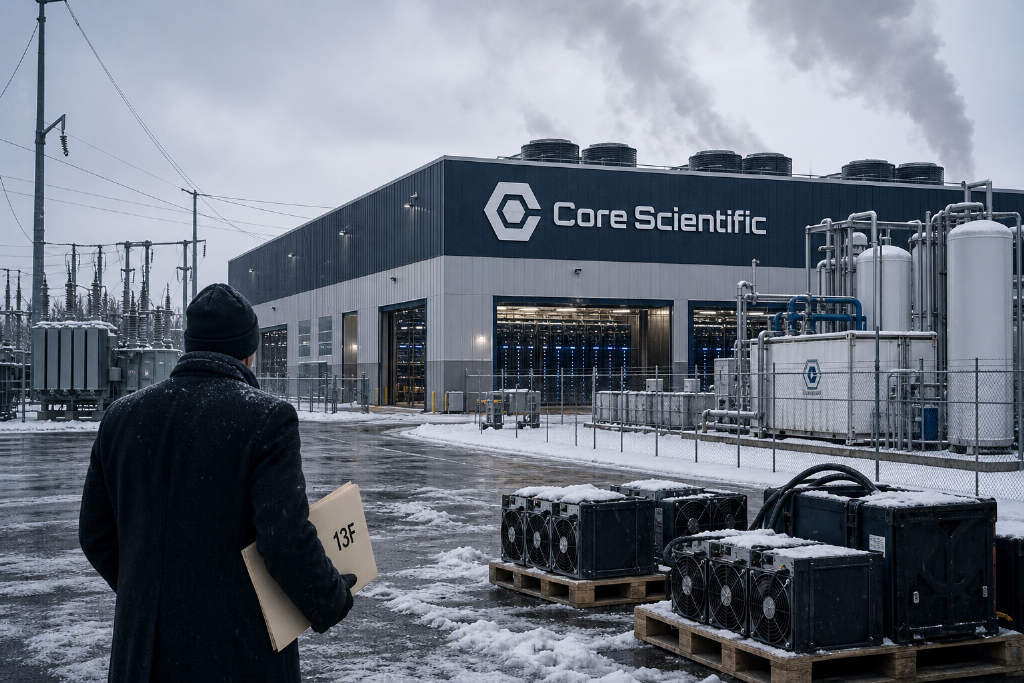
Third Point2026-08-31 10:48:33Third Point discloses stake in Core Scientific as Bitcoin miners’ AI infrastructure pivot draws attentionHedge fund Third Point disclosed in its second-quarter 13F filing that it held 54,000 shares of Bitcoin miner Core Scientific, according to Techub, which cited NewsBTC. The position is being read as a sign that institutional capital is paying closer attention to the theme of Bitcoin mining companies shifting toward AI infrastructure rather than taking direct Bitcoin exposure. The analysis pointed to miners’ existing advantages: large-scale energy access and data center infrastructure. As demand tied to the AI boom grows for power, land, cooling capacity and dense facilities, some mining companies have already started to repurpose part of their infrastructure for high-performance computing customers. The report also said Third Point’s holding suggests listed Bitcoin miners may no longer be seen only as leveraged proxies for Bitcoin. Instead, they may also be valued as infrastructure assets. AI hosting could open a second potential line of business for mining firms, with valuations that may rely on more than Bitcoin production alone.850
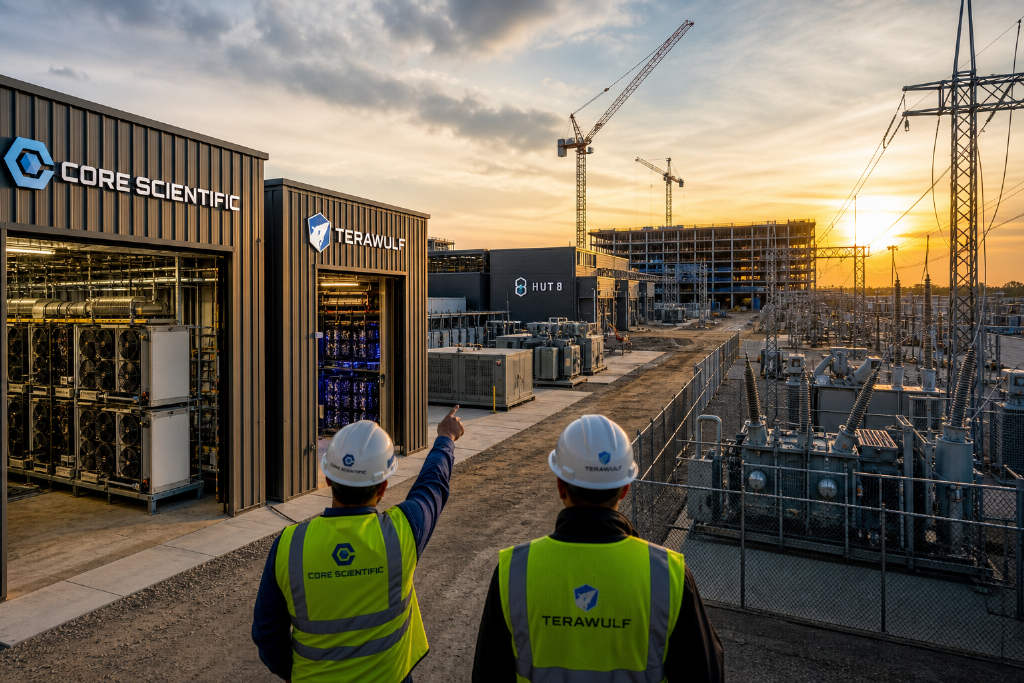
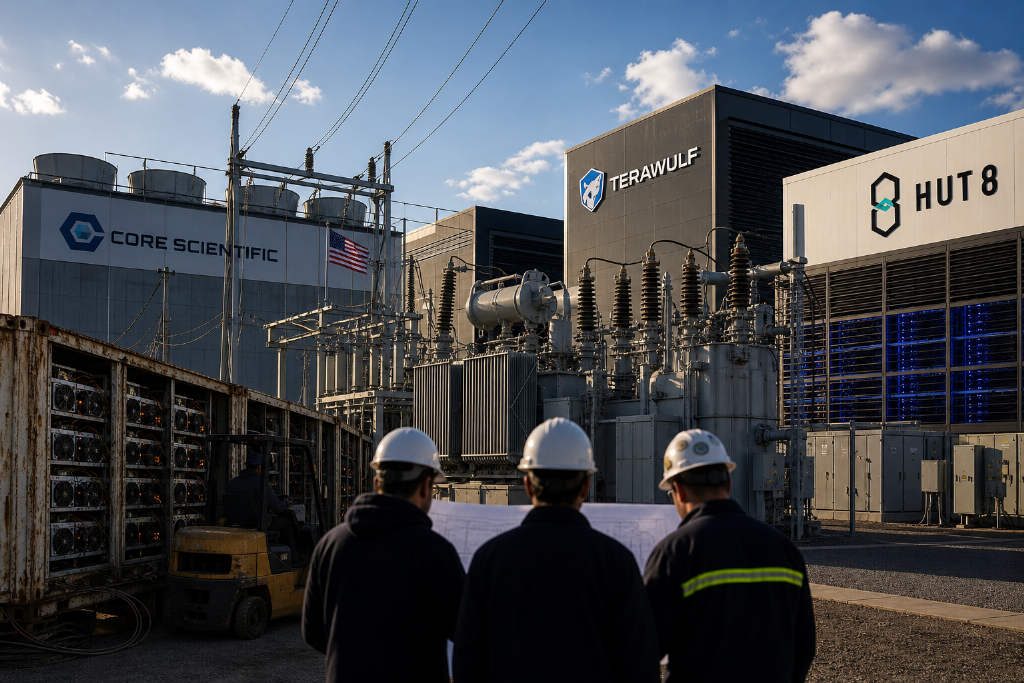
Bitcoin miner2026-08-20 08:32:50Bitcoin Miners Are Being Repriced by Power Capacity, Not BTC HoldingsA group of publicly listed Bitcoin miners is being valued on a new set of metrics as they pivot toward AI and high-performance computing infrastructure. Instead of focusing only on hash rate, Bitcoin output, and BTC held on the balance sheet, investors are increasingly looking at energized megawatts, contracted IT load, and whether projects can be delivered and billed on time. Core Scientific’s second-quarter 2026 results showed how sharp that shift has become: high-density colocation revenue reached $136.7 million, about 83% of total revenue, while self-mining revenue fell roughly 66% year over year to $21.54 million and posted a gross loss. TeraWulf and Hut 8 have also signed multibillion-dollar long-term data center leases tied to hundreds of megawatts of AI capacity, though much of that power will not be delivered until 2027 and 2028. VanEck estimates that, as of June 4, 2026, the companies involved had delivered only about 25% of their leased capacity and faced a near-term funding gap of roughly $50 billion. The market’s conclusion is becoming clearer: planned gigawatts are not enough. What matters is power that can be energized, financed, built into high-density data centers, and leased for years to creditworthy customers.1310
Bitcoin miner2026-08-19 01:11:31Wall Street Is Repricing Bitcoin Miners as Power Landlords for the AI EraWall Street is changing how it values listed bitcoin miners that are moving into AI and high-performance computing. The market is shifting away from hash rate, bitcoin output and BTC holdings toward energized megawatts, signed IT load and delivery execution. Core Scientific’s latest quarter shows the new model in action: high-density colocation revenue reached $136.7 million, or about 83% of total revenue, while self-mining revenue fell 66% year over year. TeraWulf and Hut 8 have also signed multibillion-dollar data center leases, but much of that capacity will not be delivered until 2027 or 2028. VanEck says the industry’s biggest challenge is execution, not demand, and estimates a near-term funding gap of about $50 billion across the sector.1150
Bitcoin minin2026-08-19 00:52:45Bitcoin miners shifting to AI are being valued for power capacity, not BTC outputA group of publicly listed Bitcoin miners moving into AI and high-performance computing is being judged by a new set of metrics. Investors are no longer focused only on hash rate, Bitcoin production, and BTC held on balance sheets. They are asking how much power a company controls, how much of that capacity is already energized or backed by clear grid interconnection arrangements, how much has been leased to AI customers, and how much is already delivered and billing. The shift is showing up in company results and contract announcements. Core Scientific said its high-density hosting business generated $136.7 million in revenue in the second quarter of 2026, about 83% of total revenue, while self-mining revenue fell roughly 66% year over year to $21.54 million. TeraWulf signed a 20-year data center lease with Anthropic covering about 401 MW of critical IT load and carrying an expected value of about $19 billion, while Hut 8 announced an additional 352 MW lease in Texas valued at $9.8 billion. The opportunity is large, but delivery remains limited. Based on data through June 4, 2026, VanEck estimated that the companies involved had delivered only about 25% of their leased capacity and faced a near-term funding gap of about $50 billion. In this market, the most valuable asset is not planned gigawatts on paper, but power that can be energized on time, financed, built into high-density data centers, and rented under long-term contracts by reliable customers.1270